
 Facebook
 X
X
 Pinterest
 Copy Link
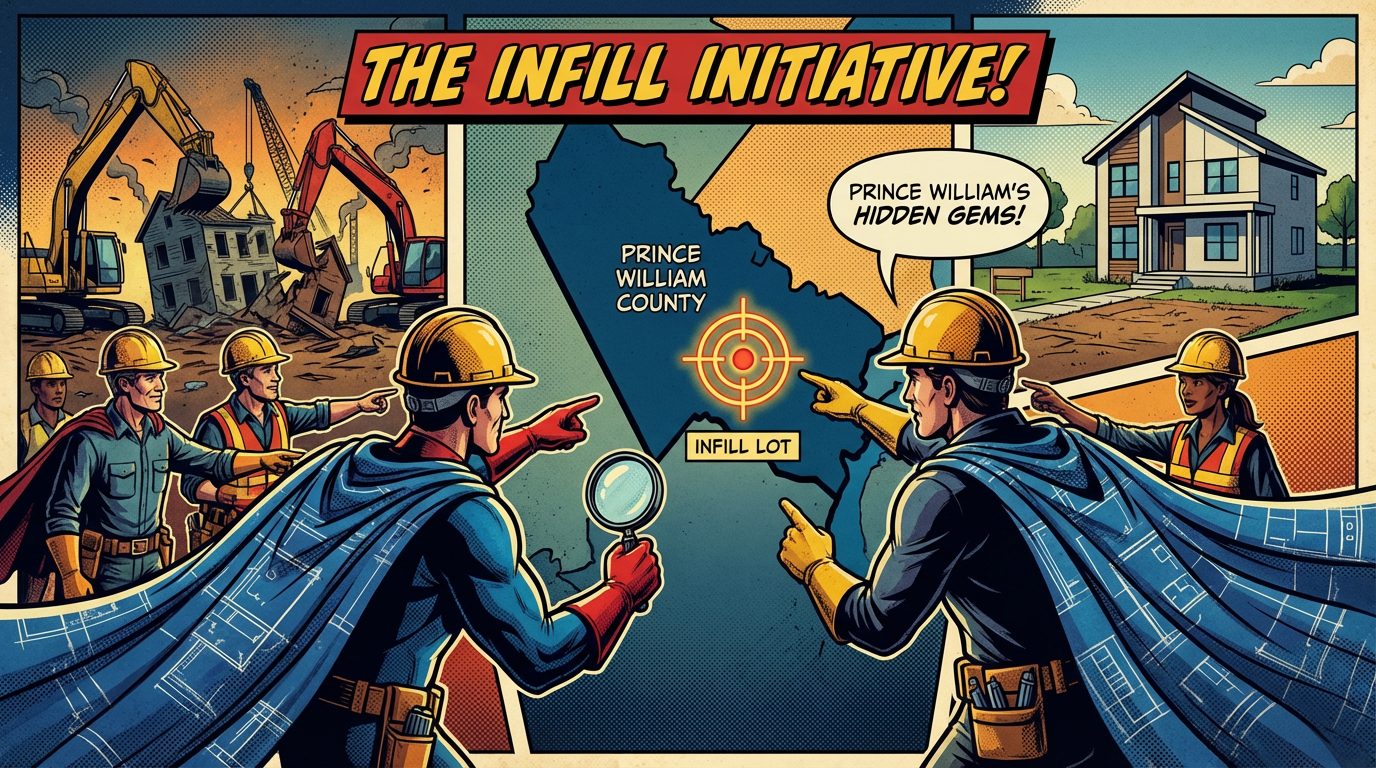
Are They Building A Place For You?
Across Northern Virginia, the demand for housing continues to grow while the supply of buildable land becomes increasingly limited. As large undeveloped parcels become harder to find, builders are turning their attention toward infill development opportunities within established communities.
Prince William County has become one of the areas where these opportunities still exist. Within its towns and neighborhoods, smaller residential lots sometimes offer builders the chance to construct new homes while working within communities that already have infrastructure, character, and strong regional connectivity.
For builders, investors, and individuals interested in residential development, understanding the role of infill lots is becoming increasingly important.
What Is Infill Development?
Infill development refers to building new homes or structures on vacant or underutilized land located within existing communities. These lots are typically surrounded by established homes, businesses, and infrastructure.
Instead of developing large subdivisions on previously undeveloped land, infill development focuses on making use of available space within communities that already exist.
In many cases, infill development occurs in historic towns, older neighborhoods, or small communities where individual residential lots remain available.
This approach offers several advantages:
• Existing roads and utilities may already be in place
• Communities already have established character
• Buyers often prefer locations close to employment centers and amenities
Because of these factors, infill development has become an important part of how housing supply grows in mature regions like Northern Virginia.
Why Builders Are Interested in Smaller Lots
Large tracts of land suitable for subdivision development have become increasingly scarce across Northern Virginia. As a result, builders often evaluate smaller parcels that can support individual homes.
These smaller projects can be appealing because they allow builders to:
• develop new homes in desirable locations
• meet demand for housing in established communities
• complete projects on a smaller scale
For many builders, infill development represents a way to remain active in areas where large-scale development opportunities are limited.
This trend is not unique to Northern Virginia. Across the country, urban and suburban regions with limited undeveloped land are seeing increased interest in smaller residential lots.
Prince William County’s Role in Northern Virginia Growth
Prince William County has experienced significant growth over the past several decades. Its location within commuting distance of Washington, D.C., combined with its mix of suburban and historic communities, has made it an important part of the region’s housing market.
The county includes a wide variety of communities, ranging from larger suburban developments to smaller historic towns. This diversity creates opportunities for different types of housing, including new construction within existing neighborhoods.
Because Prince William County still includes areas where residential lots may be available, it has become a place where builders sometimes explore infill development opportunities.
The Appeal of Established Communities
One of the advantages of infill development is that it allows builders to create new homes within communities that already have identity and character.
Buyers often appreciate:
• mature trees and established streets
• proximity to parks and local businesses
• existing transportation infrastructure
• connections to regional employment centers
These qualities can make homes built on infill lots appealing to buyers who want modern construction while still living in a community with history and personality.
Historic towns in Prince William County often provide this type of environment.
Infrastructure Advantages
Another reason builders consider infill lots is the presence of existing infrastructure. In many established communities, roads, utilities, and public services are already available.
This can simplify certain aspects of development compared to building in completely undeveloped areas.
Existing infrastructure may include:
• paved streets
• water and sewer connections
• electrical service
• nearby schools, parks, and community facilities
While each development project must still meet local regulations and permitting requirements, working within established infrastructure can sometimes streamline parts of the development process.
Market Demand for New Construction
Even in communities with older homes, many buyers continue to look for new construction properties. New homes often appeal to buyers because they provide modern layouts, energy-efficient features, and contemporary building materials.
Infill development allows builders to introduce new homes into communities where buyers may want to live but where existing housing inventory is limited.
By constructing homes on smaller available lots, builders can meet demand while preserving the character of the surrounding neighborhood.
The Role of Smaller Builders
Infill development projects are often particularly attractive to small and mid-sized builders. Unlike large national builders who focus on major subdivisions, smaller builders may specialize in constructing individual homes or limited numbers of homes within existing communities.
These builders often seek out residential lots that offer potential for thoughtful development. Projects may include:
• custom homes
• narrow-lot homes
• modern infill designs that complement surrounding architecture
Because these projects are typically smaller in scale, they allow builders to work carefully within the character of the community.
Historic Towns and Infill Opportunities
Historic communities sometimes contain residential lots that were originally part of older town layouts. Over time, some of these lots may remain undeveloped or may become available for new construction.
Towns with historic roots often attract buyers who appreciate:
• distinctive architecture
• walkable streets
• local businesses and community gathering places
When infill development occurs in these communities, builders typically aim to design homes that respect the surrounding character while incorporating modern living spaces.
The Importance of Local Regulations
Anyone considering purchasing land for development should carefully review local zoning regulations and building requirements. Municipal governments establish rules that guide how land may be used and what types of structures can be built.
These regulations may include:
• zoning classifications
• setback requirements
• building height limits
• parking requirements
• permitting processes
Local planning offices can provide guidance on these matters, helping builders and buyers understand the steps involved in the development process.
Opportunities Within the Town of Quantico
Within Prince William County, the Town of Quantico represents one of the region’s most distinctive communities. Located along the Potomac River and surrounded by Marine Corps Base Quantico, the town has a unique history and geographic setting.
The community’s small-town character, proximity to the river, and access to regional transportation make it a place that sometimes attracts attention from individuals exploring residential land opportunities.
As with any potential development project, buyers and builders should evaluate individual properties carefully to understand zoning regulations and feasibility considerations.
Looking Ahead
As Northern Virginia continues to evolve, the importance of infill development will likely continue to grow. With fewer large undeveloped parcels available, smaller residential lots within existing communities may play an increasing role in the region’s housing landscape.
For builders, investors, and individuals interested in residential construction, exploring these opportunities requires both careful research and a thoughtful understanding of local communities.
Prince William County, with its mix of suburban growth and historic towns, remains an area where these possibilities can sometimes be found.
People Also Ask
Q1: What is infill development in Prince William County, VA?
Infill development in Prince William County refers to building new homes on vacant or underused lots within established neighborhoods. These projects allow buyers to enjoy modern homes while staying close to amenities, commuting routes, and community features common across Northern Virginia.
Q2: Are infill homes a good investment in Northern Virginia?
Yes, infill homes can be strong investments due to their desirable locations. Buyers in Northern Virginia often prioritize proximity to Washington, D.C., schools, and transportation. That demand can support long-term value, especially in areas like Woodbridge, Dumfries, and Quantico.
Q3: Can you build on a vacant lot in Prince William County?
You can, but it depends on zoning, setbacks, and local regulations. Each lot must meet specific requirements set by Prince William County. Working with a knowledgeable REALTOR® and local planning office ensures you understand what’s possible before purchasing.
Q4: Why are builders focusing on smaller lots now?
Large undeveloped land parcels are becoming scarce across Northern Virginia. Builders are turning to smaller infill lots to continue meeting housing demand while staying in desirable, established communities with existing infrastructure.
Q5: Is the Town of Quantico a good place to buy land?
The Town of Quantico offers unique opportunities due to its waterfront location and historic character. However, buyers should carefully review zoning and development requirements, as opportunities vary significantly by property.
Final Thoughts
The opportunity is hiding in plain sight.
Here’s the bottom line…
Infill development isn’t just a builder trend—it’s a shift in how Northern Virginia grows.
And if you know what to look for, it opens doors:
For smarter investments
For better home locations
For hidden opportunities, most people overlook
Exploring Opportunities in Quantico
For those interested in learning more about the Town of Quantico and potential land opportunities within the community, researching local properties and development resources can be a helpful starting point.
Understanding the town’s history, regulations, and community character can provide valuable insight into the possibilities that exist within this unique Northern Virginia location.
For individuals interested in learning more about the community or exploring potential opportunities in the area, researching the Town of Quantico may reveal a hidden gem along the Potomac River.


