
 Facebook
 X
X
 Pinterest
 Copy Link
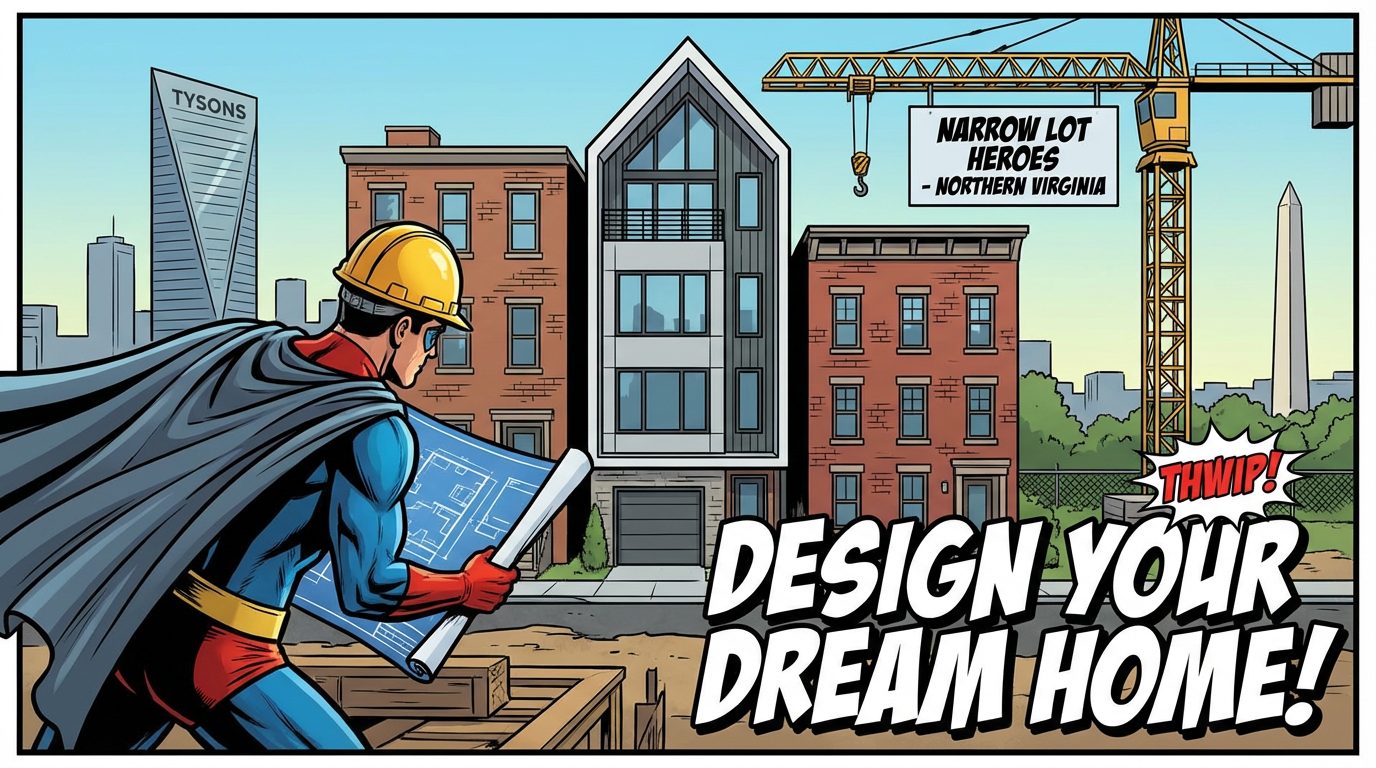
Are You Looking For A Place To Call Home?
As land becomes increasingly scarce across Northern Virginia, many homebuyers and builders are discovering opportunities on smaller residential parcels. These properties, often referred to as narrow lots or infill lots, can provide a pathway to building a custom home within established communities.
While designing a home for a narrow lot requires thoughtful planning, modern architecture and creative design solutions make it possible to create beautiful and functional homes even on smaller parcels of land.
In communities throughout Prince William County and Northern Virginia, including historic towns such as Quantico, narrow-lot homes are becoming an increasingly practical way to add new housing to existing neighborhoods.
Understanding how these homes are designed can help buyers and builders evaluate opportunities when considering residential land.
What Is a Narrow Lot Home?
A narrow lot home is a residence designed specifically to fit on a smaller or narrower parcel of land than a traditional suburban lot. While lot dimensions vary by location, narrow lots are generally characterized by limited street frontage.
Rather than spreading outward across the property, these homes typically make use of vertical space to maximize square footage and functionality.
Common characteristics of narrow lot homes include:
• Two- or three-story floor plans
• Efficient interior layouts
• Open-concept living spaces
• Compact outdoor areas such as patios or small yards
With thoughtful planning, narrow lot homes can offer the same comforts and amenities found in larger homes.
Why Narrow Lot Homes Are Becoming More Common
Across Northern Virginia, the supply of large undeveloped parcels has steadily declined as development has expanded throughout the region. As a result, both builders and buyers are increasingly looking toward smaller residential lots located within existing communities.
Narrow lot homes allow builders to:
• develop housing in established neighborhoods
• make efficient use of available land
• create modern homes in desirable locations
For buyers, these homes can provide access to communities that might otherwise be difficult to enter due to high land prices or limited housing inventory.
Infill development using narrow lot designs has become an important part of how housing supply continues to grow in many mature metropolitan areas.
Designing for Efficiency
One of the most important principles when designing a home for a narrow lot is efficient use of space. Because the home’s footprint may be limited, architects often focus on layouts that maximize functionality without sacrificing comfort.
Open floor plans are commonly used to make interior spaces feel larger and more connected. By combining living, dining, and kitchen areas into a single open space, designers can create a sense of spaciousness even within a smaller footprint.
Large windows and natural light also play an important role. Natural light helps make interior spaces feel more expansive while visually connecting the home to the surrounding environment.
Vertical Living
Many narrow-lot homes use multiple stories to increase living space while remaining within the lot’s footprint.
Two and three-story homes are common designs for these properties. In some cases, a three-story layout allows homeowners to include features such as:
• multiple bedrooms
• dedicated office space
• rooftop terraces or balconies
• additional storage areas
Vertical living allows the home to remain compact while still offering the amenities expected in modern residential construction.
Outdoor Space on Smaller Lots
Even on a narrow lot, outdoor living can still be an important part of the home’s design.
Architects often incorporate outdoor spaces in creative ways, such as:
• rear patios or courtyards
• rooftop terraces
• small landscaped yards
• balconies connected to upper floors
These spaces provide opportunities for relaxation and outdoor enjoyment without requiring a large lot.
In communities with nearby parks, waterfront areas, or recreational amenities, smaller private outdoor spaces can be complemented by access to shared outdoor environments.
Architectural Creativity
Designing homes for narrow lots often encourages architects to explore creative design solutions.
Architectural styles used in narrow lot homes can vary widely, from traditional designs that blend with historic communities to modern layouts that emphasize clean lines and efficient use of space.
Features often incorporated into narrow lot designs include:
• tall ceilings
• large windows
• flexible living spaces
• integrated storage solutions
These elements allow homes to feel spacious and comfortable even within a smaller footprint.
Important Planning Considerations
Before building on any residential lot, it is important to understand local zoning regulations and development requirements. Each municipality establishes rules governing how land may be used and what types of structures may be built.
Key considerations may include:
• zoning classifications
• setback requirements
• building height limitations
• parking requirements
• permitting procedures
Consulting with local planning offices and qualified design professionals can help ensure that a proposed home design complies with applicable regulations.
Narrow Lot Homes in Historic Communities
Many historic towns throughout Northern Virginia were originally developed with smaller lot sizes than those found in modern suburban subdivisions. These traditional lot layouts can create opportunities for narrow lot homes.
When designing homes in historic communities, architects often seek to balance modern functionality with respect for the surrounding neighborhood character.
This approach allows new homes to integrate thoughtfully into established environments while still providing contemporary living spaces.
Historic communities can offer unique settings for custom homes that combine traditional charm with modern design.
The Future of Infill Development
As metropolitan regions continue to grow, infill development will likely play an increasingly important role in how new housing is introduced into established communities.
Rather than expanding outward indefinitely, many communities are exploring ways to make thoughtful use of existing land within town boundaries.
Narrow lot homes represent one of the solutions that allows housing supply to grow while preserving the character and infrastructure of existing communities.
For builders and buyers alike, understanding how these homes are designed can open new possibilities when evaluating residential land opportunities.
Exploring Opportunities in Northern Virginia
Throughout Prince William County and Northern Virginia, smaller residential parcels occasionally become available for those interested in building custom homes.
Historic communities such as the Town of Quantico may offer opportunities for residential development within a distinctive setting near the Potomac River and regional transportation connections.
Anyone considering building a home should take time to research local regulations, consult with professionals, and carefully evaluate the potential of individual properties.
With thoughtful design and planning, narrow lot homes can provide a unique pathway toward creating a custom residence in an established community.
People Also Ask
Q1: Can you build a custom home on a narrow lot in Prince William County, VA?
Yes, in many cases you can, but the lot must meet local zoning, setback, height, and parking requirements. Prince William County supports infill development in appropriate areas, but every parcel is different. Before buying land in Prince William County, it is smart to review the zoning and talk with local planning staff, plus a builder or architect.
Q2: Are narrow lot homes common in Northern Virginia?
They are becoming more common as land becomes harder to find and more expensive. Nationally, 65% of new single-family detached homes sold in 2023 were on lots under 9,000 square feet, and Northern Virginia remains a high-cost market with limited supply. That makes narrow-lot and infill opportunities more relevant in Northern Virginia than many buyers realize.
Q3: What are the biggest challenges of building on a narrow lot in Quantico or nearby areas?
The biggest challenges are usually setbacks, lot coverage, parking, utility placement, and creating an open floor plan rather than a cramped one. In older communities near Quantico, there can also be character and compatibility considerations. A strong design team can help you solve these issues before they become expensive mistakes.
Q4: Do homes on narrow lots have good resale value in Northern Virginia?
They can, especially when the location is strong and the design is thoughtful. In a market where the Northern Virginia median sold price was $720,500 in February 2026, and supply remained tight at 1.23 months, buyers still place a premium on good locations and functional homes. A well-designed narrow-lot home can absolutely compete.
Q5: What design features make a narrow house feel bigger?
Open-concept living areas, higher ceilings, large windows, strong natural light, built-in storage, and outdoor connections like patios or balconies all help. In Northern Virginia, many buyers also value flexible office space and efficient multi-story layouts. The trick is making every room feel intentional instead of squeezing in space just to say it is there.
Learn More About Opportunities in Quantico
For individuals interested in exploring residential land opportunities within the Town of Quantico, researching available properties and local development resources can be a helpful first step.
Learning about the community, its history, and its development regulations can provide valuable insights into the possibilities within this distinctive Northern Virginia town.
For individuals interested in learning more about the community or exploring potential opportunities in the area, researching the Town of Quantico may reveal a hidden gem along the Potomac River.


